
Pioneers of British Wargaming

This blog focuses on key figures in British wargaming during the past century: ‘H. G. Wells to Dave Brown’. Many of us will be familiar with their names without necessarily being able to pinpoint their contributions. Setting each individual in context, I will provide a bit of background to our games, which often draw upon their ideas and mechanics, whether consciously or not. As a result, the wider wargaming tradition will hopefully come into better focus, allowing us to explore their rules and game systems (or build our own) more effectively. Make a cup of tea, grab an armchair, and enjoy this long-read slice of wargaming history!
Early Wargaming

Wargaming’s origins go back a long way to 7th Century India, where chess originated, before spreading to Persia and Europe. However, the first game to break away from chess was invented in 1780. Kriegspiel was then developed in Prussia by Reisswitz during the Napoleonic Wars and adopted by future Chief of the Prussian General Staff Helmuth von Moltke who, in 1828, founded a wargame club called the Kriegspieler Verein which soon began to publish its own periodical.
Other countries around the world became interested in German wargaming as a result of the 1870-1871 Franco-Prussian War. Rules for wargames as military aids were developed by the British, American, and German militaries. The American and Royal Navies also used Krigespiel. By the time of the First World War all major powers were using wargames as military tools, such as the Germans wargaming of the Schlieffen Plan.
The years between the World Wars were notable for the lack of military wargaming activity, particularly in Britain and the US. In general, most wanted to forget the carnage of the Great War, but Germany still relied on the wargame as a principal training tool, especially since the Treaty of Versailles denied that country the right to field the necessary army appropriate for large scale training exercises.
World War Two saw extensive use of wargames as military planning and simulation tools. However, the development of the hobby in Britain was overshadowed in the 1950s by the rise of wargaming in America under Charles Roberts and Jack Scruby. Only in 1959 did the first Airfix HO/OO model soldiers became available (‘flat’ metal soldiers being already common).
1. A GAME OF SOLDIERS: H. G. WELLS (1866-1946)

H. G. Wells was an author whose Little Wars was written in 1913 and used miniature soldiers and toy cannon that shot small bullets to knock over the soldiers. The idea was one hit, one kill. Wells simply believed that combat ‘should be by actual gun and rifle fire and not by computation. Things should happen and not be decided.’ His games were decidedly for fun, not military simulation (Wells was actually a pacifist).
Little Wars was the first set of popular published wargame rules. Instead of using dice for randomness, the game relied on physical skill and deterministic rules. Combat at range was resolved using actual spring-loaded toy cannons or firing toothpicks. Close combat was resolved by simple ratios and fixed rules rather than chance. For example, if two soldiers met one, the one was removed; if equal numbers met, they both ‘killed’ each other and were removed from the board. Movement was measured precisely using string or tape measures (usually 12 inches for infantry and 24 inches for cavalry) rather than randomized movement rolls. A coin toss was used once at the start of the game to determine which player chose their side of the field and which player moved first. Wells intentionally avoided dice to make the game a test of strategy and physical marksmanship, explicitly contrasting it with the more complex, dice-heavy military Kriegsspiel training games used by the Prussian army.
Coupled with the inexpensive mass produced toy soldiers of the time, this game earned Wells the title ‘The Father of Miniature Wargaming’. However the book’s impact was blunted by the economic conditions of the two World Wars and a lack of publicity.
2. FOREFATHER OF ANCIENTS: TONY BATH (1926-2000)

Tony Bath was a seminal figure in British wargaming, widely regarded as the ‘founding father’ of ancient wargaming. Born in Southampton, he served in the British Army during World War II, after which he began collecting military miniatures. In 1955 Bath joined the British Model Soldier Society (BMSS), marking his formal entry into organized hobby circles.
In 1956 he published his first medieval and ancient wargaming rules in the BMSS Bulletin, arguably the first of their kind. These rules were a major inspiration for Gary Gygax’s Chainmail (1971), which in turn became the basis for the roleplaying game Dungeons & Dragons.
In 1965 he founded The Society of Ancients, a major historical wargaming organization that still exists today. Bath published a set of rules for ancient, medieval, and 18th-century warfare through Donald Featherstone in 1966, and in 1973 his most influential book, Setting up a Wargames Campaign, which detailed his pioneering work on campaign logistics and map-based play, came out. In 1976 he published Peltast and Pila, a set of ancient wargaming rules designed for solid figures rather than traditional ‘flats’. A history followed – Hannibal’s Campaigns (1981) via Patrick Stephens Limited.
Bath is best known for creating the Hyboria campaign in the mid-1950s, a long-running fantasy wargame setting loosely based on Robert E. Howard’s Conan series. This campaign is considered a critical precursor to modern role-playing games (RPGs).
3. OLD SCHOOL DOYEN: DONALD FEATHERSTONE (1918-2013)

Donald Featherstone is known in the UK as the co-Father of wargaming. He came to prominence in 1960 by starting The War Game Digest, an early wargames magazine, with Tony Bath, based on American Jack Scruby’s magazine of the same name (begun in 1957).
Around the same time he began writing an influential series of books on wargaming, which represented the first mainstream published contribution to wargaming since Little Wars. Titles included: War Games (1962), Advanced Wargames, Solo Wargaming, Wargame Campaigns, Battles with Model Tanks, and Skirmish Wargaming. Such was the popularity of these titles that other authors were able to have published wargaming titles. This output of published wargaming titles from British authors coupled with the emergence at the same time of several manufacturers providing suitable wargame miniatures (e.g. Miniature Figurines, Hinchliffe, Peter Laing, Garrisson, Skytrex, Davco, Heroic & Ros) was responsible for the huge upsurge of popularity of the hobby in the late 1960s and into the 1970s.
In 1962 Donald Featherstone started publishing Wargamers’ Newsletter to replace The War Game Digest. He also organised the first UK National Wargaming Championships, held in Southampton in 1966.
4. FROM BATTLEFIELD TO TABLETOP: PETER YOUNG (1915-1988)
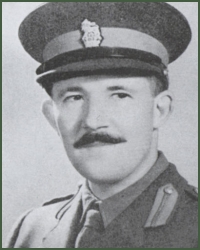
Brigadier Peter Young was a distinguished British Army officer and pioneering wargamer. Commissioned in 1939, Young served with No. 3 Commando in France, Norway (Operation Claymore, Archery), Dieppe, Sicily (Operation Husky), and Normandy (Operation Overlord). He was highly decorated, receiving the Distinguished Service Order (DSO) and Military Cross (MC) with two bars.
In 1967 he and Lt. Col. JP Lawford published Charge! Or How to Play Wargames. He is also known for The War Game (1972), influencing early enthusiasts and rules development, becoming a key figure in modern wargaming. Young was an early member of the British Model Soldier Society, battling with figures like Charles Grant in pre-WWII games.
Young’s military experience deeply informed his wargaming, where he created challenging scenarios and helped establish the hobby, particularly through his influential books that introduced many to tabletop wargaming.
5. SIMPLE RULES AND PLASTIC FIGURES: TERRY WISE (d. 2010)

Terence ‘Terry’ Wise was a prominent British wargamer, military historian, and author. His Introduction to Battle Gaming (1969) was a seminal work for early wargaming enthusiasts. Wargame Rules for English Civil Wars and Thirty Years War (1982) became a widely used set of rules for 17th-century miniature warfare. Wise also authored numerous Osprey Men-at-Arms books, including Armies of the Carthaginian Wars 265–146 BC, besides the popular American Civil War Wargaming rules published by Airfix Magazine. Wise is remembered as a hobby pioneer who helped popularize 1:72 scale plastic figures (such as Airfix) in battle gaming. His unpublished rules were posthumously released in 2010 as part of John Curry’s History of Wargaming Project.
6. SYSTEMATISING ANCIENTS: PHIL BARKER (b. 1932)

Barker began wargaming as a boy using H. G. Wells’ Little Wars, though his interest lapsed during his time serving in the army. In the early 1960s he gamed alongside founders of the modern hobby such as Donald Featherstone, Tony Bath, and Charles Grant. At the beginning he did not play ancients. His introduction to ancients was at a wargames show to which he had come to put on a modern warfare demonstration. There he met Tony Bath, and from him he acquired his first ancient wargames figures, an army of Byzantine flats.
By 1968 he had written several sets of wargames rules – for ancient and medieval warfare, the American Civil War, and the Second World War. He then began to focus on warfare of antiquity and, in 1968, and, along with Bob O’Brien and Ed Smith, founded the Wargames Research Group (WRG). One of the basic principles of the WRG was that wargames rules should be based on the study of the nature of warfare of the period being modelled, and Phil was initially the researcher of the group. He published his best-known work, the Armies and Enemies of Imperial Rome, in 1972.
Barker’s major contribution, however, has been as an innovative writer of games mechanisms. He has described his rules-writing philosophy as simply ‘It is my aim to produce the most accurate and playable rules I possibly can’. However, his succinct writing style has drawn criticism, resulting in the term Barkerese to describe his complex explanation of rules.
The first edition of the WRG’s War Games Rules 1000 BC to 500 AD was published in 1969 and immediately made a great impact. The WRG Ancients rules ran to seven editions and were, in the 1970s and early 80’s, by far the most popular rules in this period.
In 1990, he, along with Richard Bodley-Scott, authored De Bellis Antiquitatis (DBA), a completely new set of rules for the Ancient period. These were fastplay rules for Ancients to Renaissance and radically minimalist (each side having just 12 ‘elements’). DBA led to a follow on series of rules using similar mechanisms known collectively as DBx (including the multiple-unit DBM ruleset). While not enjoying as dominant a position as his earlier rules, these remain popular worldwide. One of the more important developments from DBx is the use of standardized base frontages for mounting figures. When Barker’s ancient rules standardized the frontages for 25mm figures at 60mm and 40mm for 15mm or smaller figures, other rule sets for ancient and medieval wargaming also adopted them.
Phil Barker was a founder member of the Society of Ancients, serving on the committee for many years and contributing regularly to their magazine Slingshot. In 1994 he was elected Life Vice-President.
7. UNIVERSAL WARGAMER: CHARLES GRANT (1915-1979)
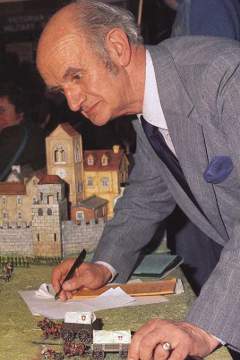
Born in Scotland, Charles Grant joined the Metropolitan Police in London and served as a Squadron Leader in World War Two. Between 1969 and 1975, he served as the editor of Slingshot, the journal of the Society of Ancients, and was President of the Society of Ancients (1975-1977).
Grant authored several seminal books that defined ‘old school’ wargaming: Battle: Practical Wargaming (1970) – a World War II rulebook compiled from his earlier articles in Meccano Magazine; The War Game (1971) – his most famous work, focusing on 18th-century warfare; Napoleonic Wargaming (1973); The Ancient War Game (1974); and Wargame Tactics (1979).
Many modern wargaming publications, such as the Table Top Teasers series and the Wargamers’ Annual (including the upcoming 2025 edition), are authored by his son, Charles S. Grant (often referred to as Charles Grant Jr.).
8. FROM NAPOLEONICS TO TANK WARFARE: BRUCE QUARRIE (1947-2004)

Bruce Quarrie studied at Cambridge in the late 1960s before joining Patrick Stephens Limited in 1972 as the editor of the influential Airfix Magazine. He specialist interests were Napoleonic, World War Two, and Modern warfare.
He is best known for his Napoleonic and WWII rules and books, which included the Airfix Guide to Napoleonic Wargaming (1974), Tank Battles in Miniature Vol 3: NW Europe 1944–45, World War To Wargaming (Airfix Magazine Guide no. 15), the PSL Guide to Wargaming (1978), the Beginner’s Guide to Wargaming (1980), and Armoured Wargaming (1987).
His most famous work was the finely illustrated, detailed and comprehensive Napoleon’s Campaigns in Miniature (1976) which got me into wargaming in the 1990s, and contained virtually all one needed to know about the period to get started. Although the rules within the book proved to be unplayable, the tome itself is a Napoleonic classic and remains a cherished reference work with excellent maps and much inspirational content.
Quarrie turned to the history of the Waffen SS and Wehrmacht in the 1980s, 1990s, and 2000s, producing books which while readable and well-illustrated have arguably aged less well in light of modern research.
Many of his titles have been reproduced for modern audiences in The History of Wargaming Project, including Tank Battles in Miniature Vol 5: Arab-Israeli Wars.
9. SIMPLE ELEGANCE: CHARLES F. WESENCRAFT (1928-2025)
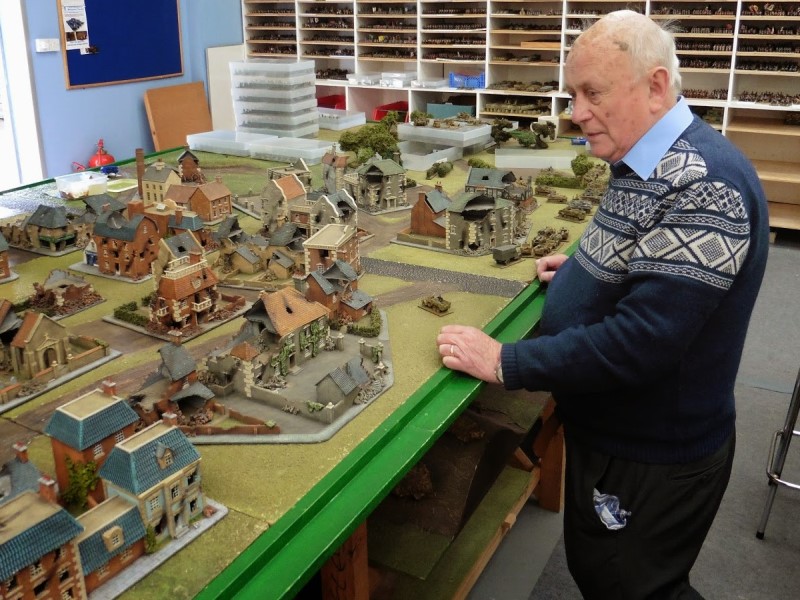
Charles Wesencraft was a notable wargames author whose heyday was in the 1970s. In 1971, he met fellow wargamers at the first wargaming event at Sallyport Tower in Newcastle, which helped establish his long-term presence in the community.
In 1974, he published his seminal work, Practical Wargaming, which aimed to simplify complex historical rules for better playability. In 1975, Wesencraft published With Pike and Musket, focusing on 16th and 17th-century warfare.
In 2009, his classic books were reprinted and expanded by the History of Wargaming Project. In 2015, Charlie Wesencraft’s Seven Steps to Freedom: Wargaming the French and Indian War and the American War of Independence, were published.
He died peacefully surrounded by family in 2025. Subsequently, posthumous tributes were released by the wargaming community, including a dedicated episode by the Yarkshire Gamers Podcast.
10. PROMOTER AND PIONEER: PETER GILDER (1930-1990)
/pic1237205.jpg)
Peter Wilcox Gilder was a highly influential British wargamer and miniature designer, particularly prominent in the 1970s and 1980s, and helping to popularise the hobby on screen.
He began wargaming in 1963, following an accident. In the early 1970s Gilder co-founded Hinchliffe Models with Frank Hinchliffe, where he served as a primary figure designer in 25mm scale.
In 1974 he served as the technical advisor for the thriller film Callan, starring Edward Woodward; his Gettysburg terrain and figures were featured in the plot. In 1977 Gilder acted as technical advisor for the Tyne Tees Television series Battleground, providing the miniatures and terrain used for five of the six battles recreated.
To those within the hobby, Gilder was most well-known from the early 1980s, when he founded the pioneering Wargames Holiday Centre in Thornton-le-Dale, North Yorkshire (later moved to Folkton). Wargamers would pay to spend a weekend or longer refighting huge battles with thousands of exquisite figures. All in all, Peter Gilder brought the hobby into the limelight while also making it as much a social as a gaming experience.
11. ACADEMIC KRIEGSPIELER: PADDY GRIFFITH (1947-2010)

Paddy Griffith was a highly influential British military historian and a pioneer in both professional and hobby wargaming.
He served as a senior lecturer at the Royal Military Academy Sandhurst (1973-1989), where he famously used wargames to assist research and strategic teaching during the Cold War. In 1974, Griffith directed an Operation Sealion Wargame at Sandhurst to simulate the proposed German invasion of Britain in 1940.
Giffith famously took part in the Battleground series of TV wargames with Peter Gilder, Paddy Griffith and Edward Woodward (of Callan and wargaming fame) in 1978.
He founded the Wargame Developments Foundation in 1980, an influential group to promote innovation in wargaming, and organised the first ‘Conference of Wargamers’ (COW) entitled ‘New Directions in Wargaming,’ in May 1980.
Following his time at Sandhurst, he worked as a freelance author, publisher, and occasional university lecturer. His influential works include:
- Forward into Battle (1981) – Influential work on tactical military history
- Battle in the Civil War (1986)
- Battle Tactics of the Western Front 1916–1918 (1994)
- Napoleonic Wargaming for Fun: Originally published in 1980; posthumously reprinted.
- Sprawling Wargames (2009)
12. EDITOR AND GENERALIST: STUART ASQUITH (1946-2019)

Stuart Asquith was a prominent British wargamer, author, and editor who was instrumental in the development of the modern miniature wargaming hobby.
He published his first book, The Campaign of Naseby 1645, through Osprey, in 1979. In 1987 Wargames Illustrated magazine started publishing, as did Stuart Asquith’s Practical Wargamer. This was a bi-monthly publication that Asquith edited between 1987 and 1999, that is considered one of his greatest legacies.
Asquith edited Regiment magazine (1994-2000), focusing on military heritage.
Asquith authored or edited over 20 books throughout his career, including:
- Military Modelling Guide to War Gaming (1987)
- Wargaming World War Two (1989)
- New Model Army, 1645-60 (1992)
- A Wargamer’s Guide to the 1812-1815 War with America (1993)
- The Partizan Press Guide to Solo Wargaming (2006)
- War in the Sudan 1884-1898: A Campaign Guide (2007)
- His final book during his lifetime, Stuart Asquith’s Wargaming 18th Century Battles (2016)
13. ENGINE AND EMPIRE: GAMES WORKSHOP (est. 1975)
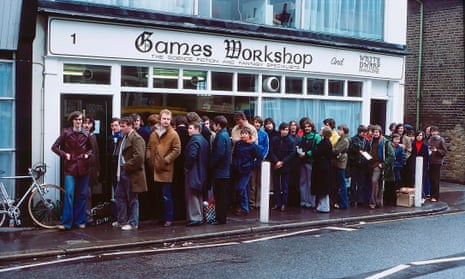
Opening day at the first Games Workshop store, Dalling Road, Hammersmith, April 1978. I frequented this shop as a teenager in the 1990s, before it closed
Games Workshop Group is a British manufacturer of miniature wargames based in Nottingham, England. Its best-known products are Warhammer and Warhammer 40,000.
Founded in 1975 by John Peake, Ian Livingstone and Steve Jackson, Games Workshop was originally a manufacturer of wooden boards for games. It later became an importer of the U.S. role-playing game Dungeons & Dragons, and then a publisher of wargames and role-playing games in its own right. It started promoting games associated with The Lord of the Rings film trilogy in 2001. It has a worldwide presence and is extremely profitable financially – being listed on the Stock Exchange.
From 1983 to 2015, Games Workshop produced what was the first miniature wargame designed to be used with proprietary models: Warhammer Fantasy Battle. This was an internationally successful fantasy miniature wargame. The First Edition rules introduced innovative open unit design rules, however later editions eliminated the option to build custom units and make use of standard army lists mandatory. Warhammer was one of the first newly developed miniature wargames to enjoy popularity after role-playing games came to market in 1974. In fact, it is because of Roleplaying games becoming so popular, and people having too many models that were rarely used, that this was first published.
Warhammer 40,000 (1987) – Is a futuristic wargame featuring rival armies with different fighting styles. This wargame has very conceptual artwork suggesting a post-apocalyptic neo-gothic universe with heavy dystopic themes. Unarguably the most profitable miniature wargame ever, it has popularized competitive tournament gameplay in large, international events sanctioned by Games Workshop, and spawned spin offs, novels, merchandise and computer games galore.
Key games designers who have worked with Games Workshop include Richard Halliwell (Warhammer, Dark Future, Space Hulk), Bryan Ansell (Warhammer, also the originator of Wargames Foundry miniatures), Andy Chambers (Warhammer 40,000, Necromunda, Battlefleet Gothic), Gavin Thorpe (Warhammer Fantasy, Warhammer 40,000, Inquisitor), Jervis Johnson (Warhammer and Epic), and Rick Priestley (see below).
The most successful wargames firm in the world, Games Workshop is renowned for the high quality of its miniatures, art and design, and games. It is also disliked by some for questionable practices such as strict copyright enforcement, high prices, and withdrawing games after a short period of time only to reintroduce them later with new rules or required models (which has angered players). Many younger players begin with GW and transition to historical wargaming in later years. It is thus an important seedbed for the wider wargaming community. Its once-ubiquitous shops have tended to close in recent years as the firm has pivoted to online presence.
14. PROPHET OF PLAYABILITY: RICK PRIESTLEY (b. 1959)

Rick Priestley was a pivotal figure at Games Workshop, instrumental in developing Warhammer and Warhammer 40,000 in the 1980s and 1990s, known for his intricate world-building.
He began his games design work in the late 1970s, joined Games Workshop in 1982, and published Warhammer Fantasy Battle with Richard Halliwell in 1983. In 1987 Games Workshop published Rick Priestley’s Warhammer 40K Rogue Trader (the first edition of WH40K). Priestley helped found the Black Library (Games Workshop’s publishing house) in 1997, and co-authored Warhammer Ancient Battles (a historical ruleset) in 1998. He designed Warmaster (a 10mm Ancients ruleset in 2000).
After leaving Games Workshop, Priestley joined Warlord Games and was involved in both sci-fi and historical games design. In 2009 the straightforward Black Powder rules were published by Rick Priestley and Jervis Johnson. In 2011 he released Hail Caesar ancients rules, and co-designed the popular Bolt Action rules for WWII in 2012. All three rulesets have proved to be extremely popular. In 2015 he released the less successful sci-fi game Beyond the Gates of Antares. While he is arguably the most influential wargames designer in modern times, unfortunately some of his earlier historical rulesets have faded in popularity over recent years. Priestley has nevertheless successfully straddled the Sci-Fi/Fantasy and Historical wargames communities for many years.
15. THE SKIRMISH REPACKAGED: ‘Too Fat Lardies’ (Richard Clarke & Nick Skinner)
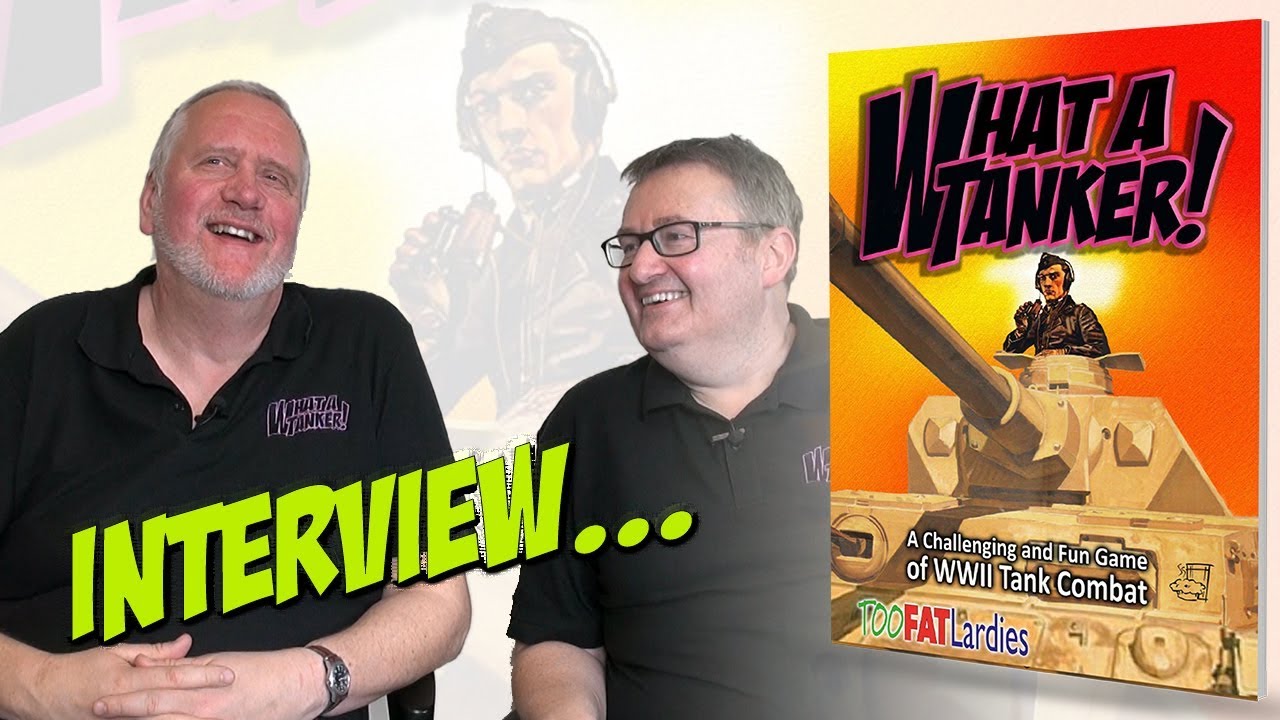
TooFatLardies is a leading independent UK-based wargame publisher specializing in historical rule sets. Their design philosophy centres on ‘friction’ – the unpredictable chaos of the battlefield – and the immense pressure of command. As of 2026, they continue to be highly active, recently launching Chain of Command v2 after 13 years of the original edition.
Popular Rule Sets
TooFatLardies produces games covering various historical eras, often emphasizing narrative-driven and card-activated gameplay.
- Sharp Practice (2008, 2nd edition 2026): Designed for large-scale skirmishes in the ‘Black Powder’ era (1700–1865), focusing on heroic characters and period flavour.
- Dux Britanniarum (2012): A game and campaign system set in the ‘Age of Arthur’ (450 AD – 600 AD).
- What a Tanker! (2018)/ What a Cowboy! (2023): Lighter, ‘beer and pretzels’ games focused on individual tank combat or Wild West gunfights
- Infamy! Infamy! (2020): focuses on large-scale skirmishes in the Ancient world, specifically from 60 BC to 100 AD
- ‘O’ Group (written by Dave Brown, published 2021). A battalion-sized World War II game where players command companies with a focus on historical doctrine and sector-based deployment
- Chain of Command (v2) (2025 – originally 2013): A platoon-level World War II game renowned for its ‘patrol phase’ deployment system and realistic tactical feel
Community and Events
The company is well-known for its vibrant community and regular engagement with players.
- Lard Magazine: An annual publication featuring new scenarios, official rule tweaks, and historical essays.
- Lard Events: Fans host dedicated ‘Lard’ gaming days globally, such as Winter Wonder Lard (Bristol), Deep Fried Lard (Edinburgh), and Lard Workshop (Nottingham).
- Oddcast: A recurring podcast where the developers (often including Richard Clarke and Nick Skinner) discuss hobby news and historical wargaming.
You can find their full catalogue of physical books and instant-access PDFs on the official TooFatLardies shop.
16. TRUE BREVITY: NEIL THOMAS

Neil Thomas is a well-known author and designer of historical wargaming rules, particularly recognized for creating simple and accessible systems for both beginners and experienced players. He is a university and college lecturer based in Orpington, Kent.
Design Philosophy
Thomas is known for his minimalist approach, often using small unit counts (typically 6-10 units per side) and straightforward mechanics to allow for fast-paced, tactical games that can be played in a single sitting. His rules are frequently used as a base for solo gaming and as a framework that players often ‘house-rule’ or adapt for specific conflicts. While seen as simplistic by some, his rules contain succinct mechanics tweaked for various combatants, and subtle rationalisation akin to ‘Ockham’s Razor’. They resemble classic wargaming revamped.
Notable Works
Neil Thomas has authored several influential books that provide both historical context and playable rule sets:
- Wargaming: An Introduction (2005) – A foundational guide for newcomers to the hobby
- Ancient and Medieval Wargaming (2007) – Focuses on battles from 3000BC to 1450AD
- Napoleonic Wargaming (2009) – Tailored rules for the horse-and-musket era
- Wargaming Nineteenth Century Europe, 1815-1878 (2012) – Covers conflicts like the Crimean War and the Franco-Prussian War
- One-Hour Wargames (2014) – A highly popular set of 30 scenarios and streamlined rules designed for quick games across multiple eras
17. AIMING AT HISTORY: DAVE BROWN
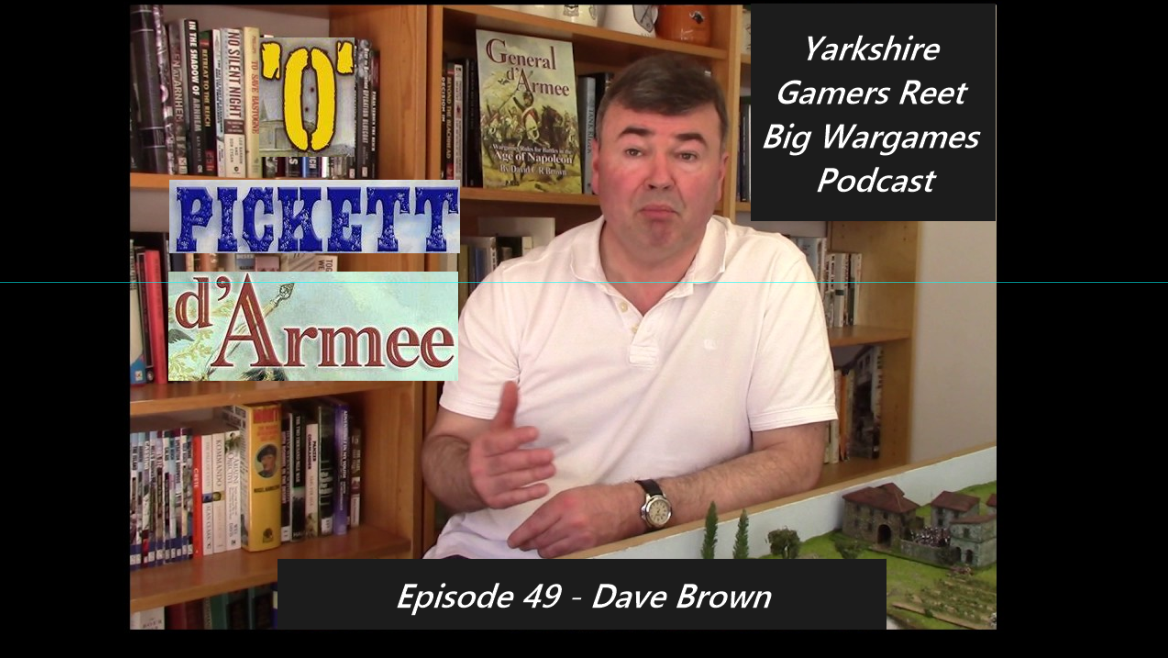
David Brown is a prominent British historical wargame designer known for creating several influential rule sets across multiple historical periods, including the Napoleonic Wars and World War II. He is often associated with TooFatLardies and their Reisswitz Press imprint, which publishes several of his most recent titles.
Background and Expertise
Brown is noted for being ‘extremely well-read’ in the history of the eras he designs for, often incorporating period-specific uniform plates and eyewitness accounts into his publications. He frequently participates in wargaming podcasts and interviews, such as ‘Battlechat’ and ‘The Yarkshire Gamer,’ to discuss the evolution of his rules and historical accuracy in tabletop gaming.
Notable Wargaming Rule Sets
His rules are characterized by ‘exciting command mechanisms’ that prioritize resource management and historical flavour. However they can be relatively complex and slow to play.
- Napoleonic Era:
- General d’Armée (2017)/ General d’Armée 2 (2024): A battalion-level system that allows for large-scale battles.
- General de Brigade: His breakout rule set, focusing on tactical wargaming in the age of Napoleon.
- World War II:
- ‘O’ Group (2021): A battalion-level set designed for players to command a battalion plus supports.
- Battlegroup Panzergrenadier (2014): An earlier, highly regarded WWII system.
- Battalion HQ: A recently announced WWII rule set slated for release through TooFatLardies.
- Other Eras:
- Pickett’s Charge (2016): A set for the American Civil War.
- Guns at Gettysburg (2007): Another prominent ACW system.
- Vexillarius (not yet released): A set for Ancient wargaming, covering Republic and Imperial Rome
Conclusion
So there we have it. Not a comprehensive list, but surely the cream of the most influential British wargaming pioneers all in one place for your delight and edification. Britain has a magnificent wargaming heritage well worth exploring, whatever our period or preferred style of rules. The next job might be to trace game mechanics and the evolution of wargaming approaches through time. Well, someone can have a go at that if they dare!


